Independent laboratoryNamed on the certificate once it is released
No released COA yet
No released COA is available for this lot.
Check document status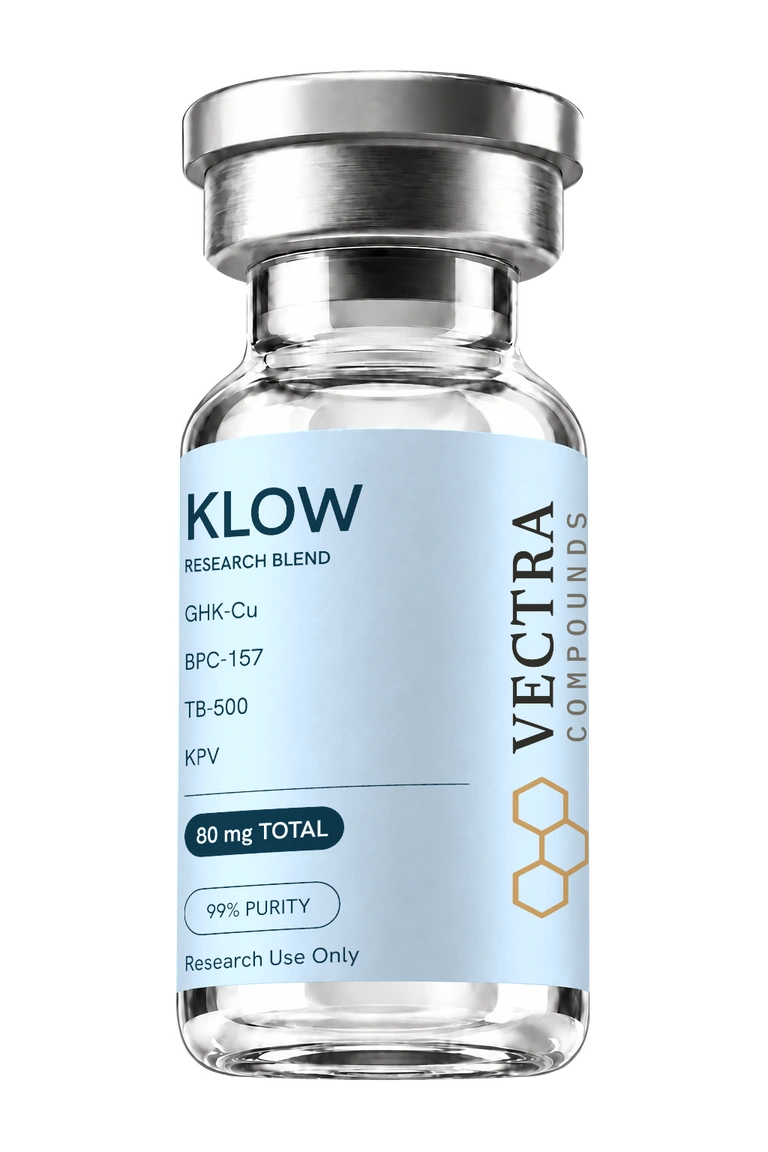
KLOW peptide reference material for in-vitro laboratory research and analytical method development. Research use only. Not for human or veterinary use; no therapeutic, preventive, or diagnostic claims are made or implied.
Shipping and taxes at checkout. Inventory is checked when adding to your bag.




Vectra publishes the laboratory certificate for every lot it releases. No released lot certificate is available for this size yet, so no current-lot results are shown.
Browse the COA libraryNo released COA is available for this lot.
Check document status| Analysis | Result | Status |
|---|---|---|
| Analytical results | Not available | No report |
Analytical results are not supplied until a certificate is released.
Check the printed lot on your vial against the certificate card that matches it.
KLOW peptide reference material for in-vitro laboratory research and analytical method development. Research use only. Not for human or veterinary use; no therapeutic, preventive, or diagnostic claims are made or implied.
Explore published literature Search PubMed for KLOWRefer to the product label and lot-specific documentation for storage and handling instructions.
KLOW supplied in the selected 80 mg Vial presentation. Other supplies are listed separately unless explicitly included in an offer.
Open the certificate attached to this product and check that the lot matches your vial. If a report is missing, contact Vectra with the product code and lot.
KLOW is a blend of 4 separately studied peptides, not a single molecule. Each has its own monograph here, carrying that component's identity, history and evidence:
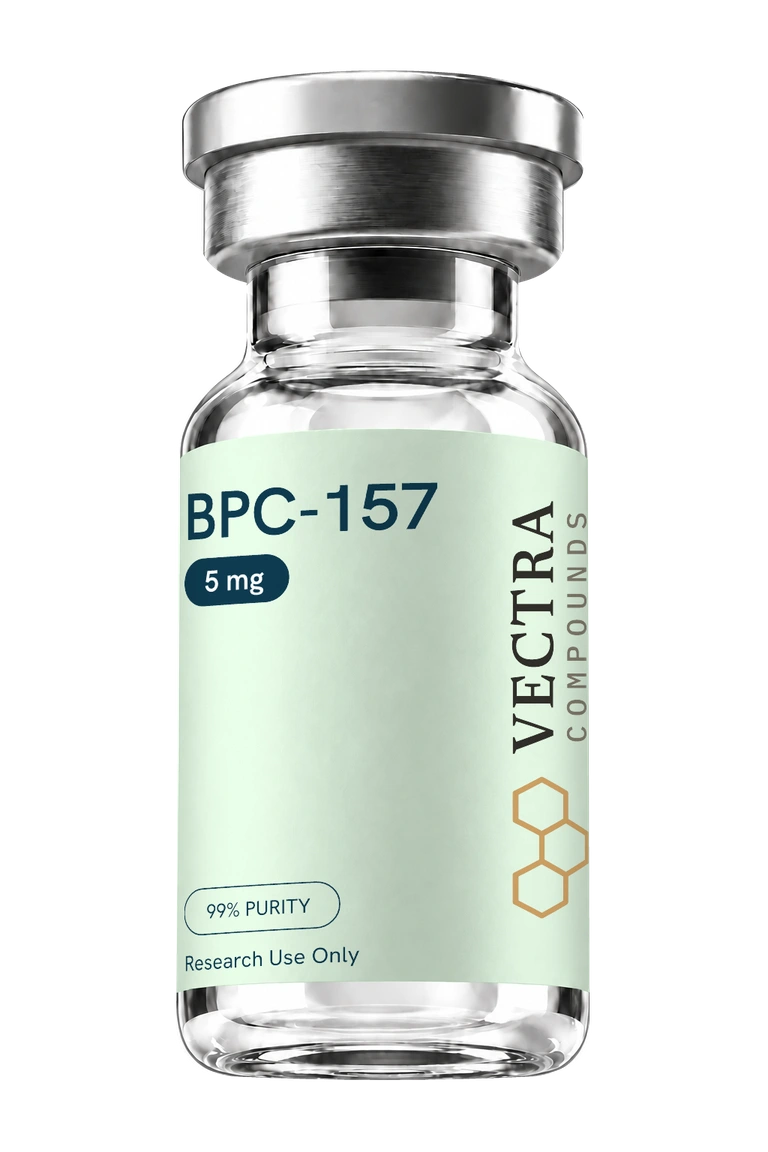
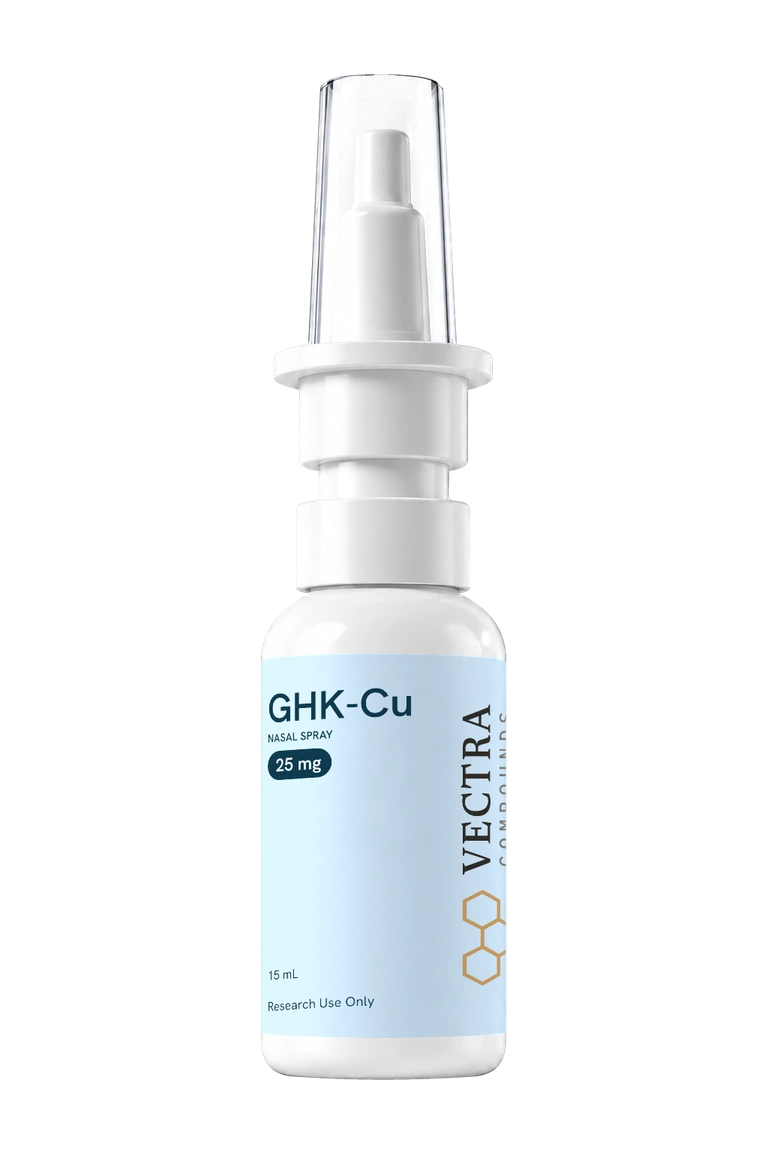
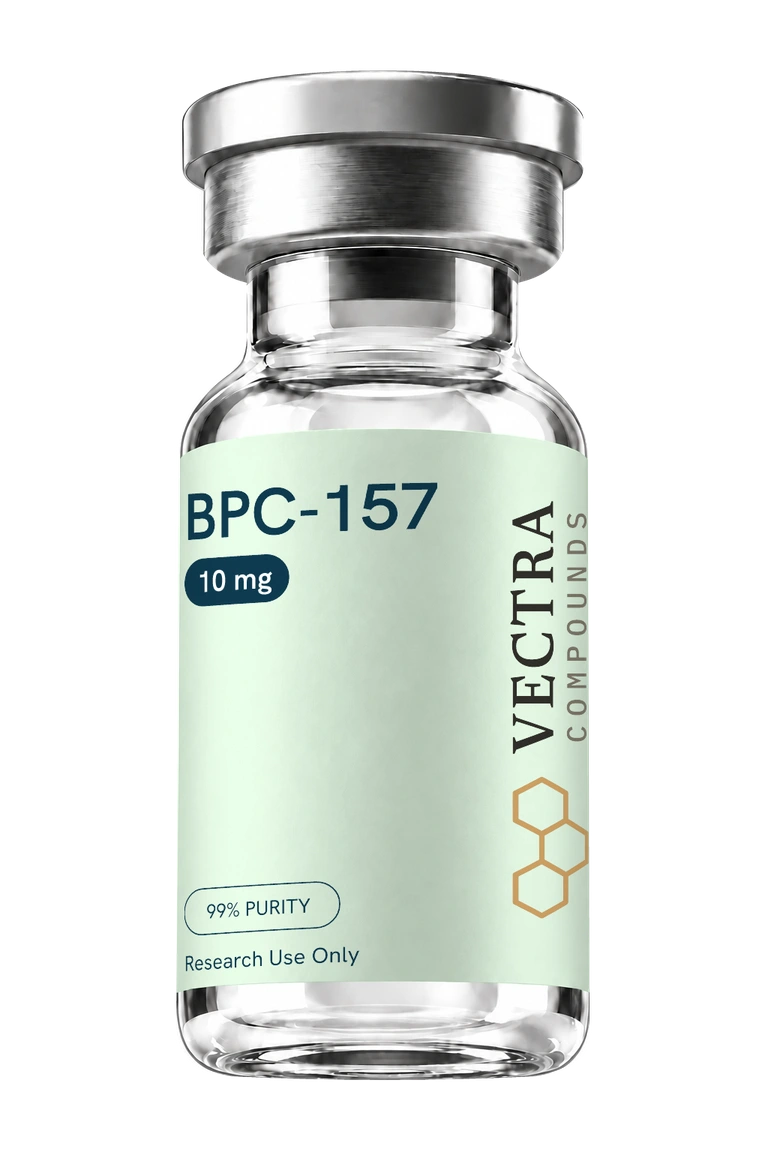
KLOW is a four-component blend: kpv, ghk-cu, bpc-157 and tb-500. Not a single molecule. A four-way co-formulation. Each component has its own monograph here carrying its identity, history and evidence.
Each component has its own reported mechanism. There is no combined-mechanism study of the four together in our sources. We make no claim as to mechanism or effect.
No development history. A vendor and community formulation rather than a developed product.
The four components have individual research contexts. The combination has none. We supply it as a reference material for in-vitro laboratory research and analytical method development only.
No human trial, PMID or peer-reviewed study of this four-component blend exists. Every claim traces back to a component studied alone. Combining four substances multiplies the unknowns rather than averaging them.
No systematic safety, interaction or stability data exists for the combination. A safety profile would have to account for all four components separately, and for any interaction between them, which is unstudied.
Not approved. Two components carry their own restrictions. KPV has been on the FDA 503A Category 2 list since 2023. GHK-Cu is scheduled for advisory review before the end of February 2027. No therapeutic, preventive, or diagnostic claims are made or implied.
Yes — in more than one way:
These are the specific, documented failure modes that lot-level third-party analysis addresses. A report reachable from the lot code printed on the vial — without asking the seller for it — is the only document that answers 'is this vial what the label says'. That is why every Vectra vial carries a QR code resolving to its own lot's published report.
Findings reported by commercial testing providers. Each names its source; none is registry- or peer-review-grade, so read them as a documented pattern rather than established prevalence.
Yes, and altered certificates have been reported in this market at material rates — see the testing findings above. Three properties make a report hard to fake:
Peptide identity data in the vendor market is often wrong in ways that are hard to see. Near-identical compounds get their CAS numbers, residue ranges, formulas and molecular weights swapped. A certificate can be internally consistent and still describe a different molecule than the label names. Most commercial peptide material ships as an acetate salt, not free base. The two forms have different measured masses, so a figure quoted against the wrong one will not reconcile. A report that does not state which form it assayed cannot be checked at all.
The standard our own reports are built to meet:
FDA has acted in this market between 2024 and 2026. Actions include a civil forfeiture over $1.7 million against a compounding operation, several rounds of warning letters to peptide vendors, and more than thirty letters in March 2026 concerning compounded GLP-1 products.
Buyers here increasingly compare document trail, not price.
Explore the published literature on KLOW. Start with the original papers, study methods and reported limitations.
Publications describe research on the molecule. They do not verify the identity, purity or performance of a Vectra product lot. See the lot-specific COA for product testing.
Your vial’s QR brings you to the product page, with its published COA alongside the product details.
These products are intended for laboratory research. Not for human or veterinary use.
KLOW peptide reference material for in-vitro laboratory research and analytical method development. Research use only. Not for human or veterinary use; no therapeutic, preventive, or diagnostic claims are made or implied.
Shipping and taxes at checkout. Inventory is checked when adding to your bag.
Vectra publishes the laboratory certificate for every lot it releases. No released lot certificate is available for this size yet, so no current-lot results are shown.
Browse the COA libraryNo released COA is available for this lot.
Check document status| Analysis | Result | Status |
|---|---|---|
| Analytical results | Not available | No report |
Analytical results are not supplied until a certificate is released.
Check the printed lot on your vial against the certificate card that matches it.
KLOW peptide reference material for in-vitro laboratory research and analytical method development. Research use only. Not for human or veterinary use; no therapeutic, preventive, or diagnostic claims are made or implied.
Explore published literature Search PubMed for KLOWRefer to the product label and lot-specific documentation for storage and handling instructions.
KLOW supplied in the selected 80 mg Vial presentation. Other supplies are listed separately unless explicitly included in an offer.
Open the certificate attached to this product and check that the lot matches your vial. If a report is missing, contact Vectra with the product code and lot.
KLOW is a blend of 4 separately studied peptides, not a single molecule. Each has its own monograph here, carrying that component's identity, history and evidence:
KLOW is a four-component blend: kpv, ghk-cu, bpc-157 and tb-500. Not a single molecule. A four-way co-formulation. Each component has its own monograph here carrying its identity, history and evidence.
Each component has its own reported mechanism. There is no combined-mechanism study of the four together in our sources. We make no claim as to mechanism or effect.
No development history. A vendor and community formulation rather than a developed product.
The four components have individual research contexts. The combination has none. We supply it as a reference material for in-vitro laboratory research and analytical method development only.
No human trial, PMID or peer-reviewed study of this four-component blend exists. Every claim traces back to a component studied alone. Combining four substances multiplies the unknowns rather than averaging them.
No systematic safety, interaction or stability data exists for the combination. A safety profile would have to account for all four components separately, and for any interaction between them, which is unstudied.
Not approved. Two components carry their own restrictions. KPV has been on the FDA 503A Category 2 list since 2023. GHK-Cu is scheduled for advisory review before the end of February 2027. No therapeutic, preventive, or diagnostic claims are made or implied.
Yes — in more than one way:
These are the specific, documented failure modes that lot-level third-party analysis addresses. A report reachable from the lot code printed on the vial — without asking the seller for it — is the only document that answers 'is this vial what the label says'. That is why every Vectra vial carries a QR code resolving to its own lot's published report.
Findings reported by commercial testing providers. Each names its source; none is registry- or peer-review-grade, so read them as a documented pattern rather than established prevalence.
Yes, and altered certificates have been reported in this market at material rates — see the testing findings above. Three properties make a report hard to fake:
Peptide identity data in the vendor market is often wrong in ways that are hard to see. Near-identical compounds get their CAS numbers, residue ranges, formulas and molecular weights swapped. A certificate can be internally consistent and still describe a different molecule than the label names. Most commercial peptide material ships as an acetate salt, not free base. The two forms have different measured masses, so a figure quoted against the wrong one will not reconcile. A report that does not state which form it assayed cannot be checked at all.
The standard our own reports are built to meet:
FDA has acted in this market between 2024 and 2026. Actions include a civil forfeiture over $1.7 million against a compounding operation, several rounds of warning letters to peptide vendors, and more than thirty letters in March 2026 concerning compounded GLP-1 products.
Buyers here increasingly compare document trail, not price.
Explore the published literature on KLOW. Start with the original papers, study methods and reported limitations.
Publications describe research on the molecule. They do not verify the identity, purity or performance of a Vectra product lot. See the lot-specific COA for product testing.
Your vial’s QR brings you to the product page, with its published COA alongside the product details.
These products are intended for laboratory research. Not for human or veterinary use.